The book
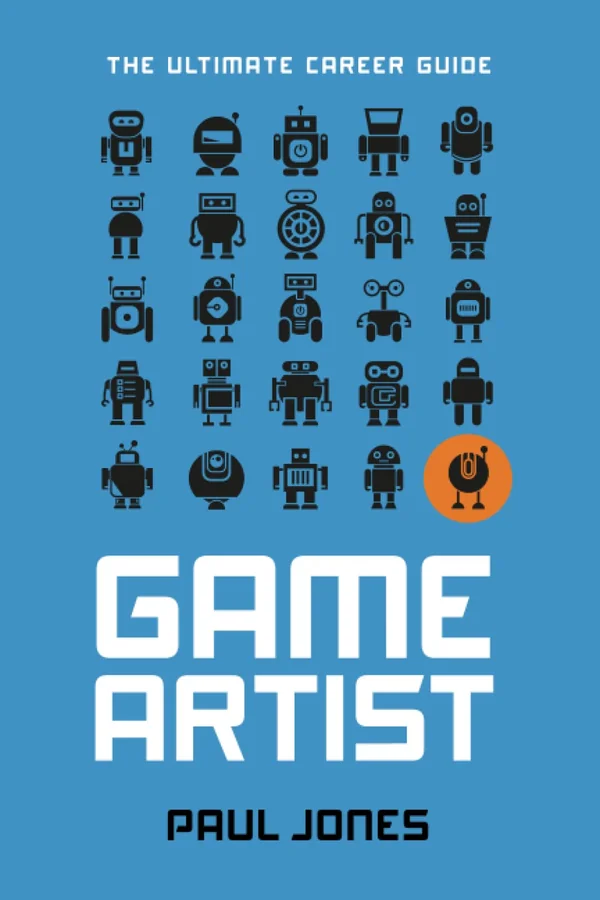
Game Artist: The Ultimate Career Guide
The career book for game artists, from first application to Art Director
Buy on Amazon Paperback, hardcover and Kindle
“Sage words from an author with gold plated credentials.”
Dan, Amazon review, 5 stars
Getting into games is hard right now, and staying in is harder. This book is for any artist trying to break in, or who’s already in and not sure what the next step is.
It covers the things nobody tells you: how to get promoted, what to look out for, which pitfalls to avoid and what’s expected of you at each level. The industry is always changing and can be tricky to navigate, so this is about spending less time worrying and more time moving your career forward. No Wacom required.
Inside the book
How do you become a successful game artist?
Game Artist: The Ultimate Career Guide walks you through the pitfalls and power-ups of building a career in this multi-billion dollar but secretive industry. Brimming with practical advice for both aspiring and experienced artists, it is a walkthrough and career guide rolled into one.
This book is for you if:
- You want to learn the secrets of the games industry
- You want to get into a video game art department
- You wonder what makes a successful game artist
- You feel stuck in your role and want to level up
- You want to make the leap into team building and management
Don’t know how to get promoted? That’s OK. It’s because you don’t know the rules of the game. Until now.
Five levels
From job applicant to Art Director
The book is split into five levels, one for each stage of an artist’s career, so you can pick the one you need now.
- Level One
Job Applicant
Finding your way into the industry, getting a killer portfolio ready, understanding what an Art Director wants to see, and interview and salary negotiation skills explained.
- Level Two
Junior Artist
Your first months in a games company: paperwork and contracts, benefits, perks and bonuses, development pipelines and company hierarchies. What is expected of a new recruit, how to avoid early burnout, and how to start climbing the ranks.
- Level Three
Mid, Senior and Principal Artist
Deciding where you are heading while mentoring others. Clear career progression, the skills you need for your Personal Development Review (PDR), whether to specialise, and how to plan an exit strategy when it is time for a change.
- Level Four
Lead Artist
The move into management: understanding yourself and your team, building and driving a successful team, tricky situations, meetings, presentations, staff reviews and negotiation, plus making time for thinking, planning and artwork.
- Level Five
Art Director
The high-stakes role explained: working with executives and publishers, deadlines, leading from the front, managing the creative process, internal and external pipelines, and getting the best from outsource studios.
Packed with hard-won information from studios around the world and in-depth interviews with seasoned industry professionals. No more messing, no more guessing: it’s time to level up.
What people are saying
‘Sage words from an author with gold plated credentials. This is a comprehensive end-to-end view of a career as a game artist, from application, to climbing the ladders and ultimately through to directorship.
In particular, I like the sense that all this comes from the heart with Paul Jones sharing from genuine experience rather than lecturing. Advice given helps not only steer the reader, but also set expectation and highlight where the reader may need to push themselves outside of their comfort zone.’
Dan - Amazon (5 Stars)
‘I bought this, read it, and immediately shared it with as many of my friends as I could. This is a fantastic book for anyone in any digital creative role. While focussing on game art, designers in other industries would also find a great deal of valuable advice here.
The book is well written, well structured, very entertaining and easy to read. It's packed with advice, anecdotes and deep explanations of everything from management structures to pension advice for artists. I can't imagine a more thorough guide on the subject.’
Jale - Amazon (5 Stars)
‘I've been a massive fan of Paul and his work for quite some time, and when I found out that he was writing a book, I just knew I had to have it.
This book is a must-have for anyone looking to become a game artist, as it provides plenty of genuine advice, tricks, tips, and behind-the-scenes knowledge that can help you succeed in this field.
You should buy the book and read it for yourself (you won't regret it), but I've walked away feeling renewed and invigorated in my desire to succeed and hopefully, one day, get my foot in the door of the industry.’
Alexander L. Amazon (5 Stars)
Looking for a gift for someone who dreams of working in games? Game Artist distils 30 years of AAA experience into a practical guide, from first portfolio to landing the job.
Questions
Is this book for me?
Who is Game Artist: The Ultimate Career Guide for?
Any artist who wants a career in games, from students and career-changers sending out their first portfolio to working artists wondering what comes next.
It covers what studios expect at every level, Applicant, Junior, Mid, Senior, Principal, Lead and Art Director, so you can see where you are and what the next step looks like.
Is it useful for students and graduates trying to get their first games job?
Yes. Level One, Job Applicant, is written for exactly that moment: finding your way into the industry, getting a killer portfolio ready, understanding what an Art Director wants to see, and interview and salary negotiation skills.
Level Two then covers your first months as a Junior Artist: contracts, benefits and bonuses, development pipelines, what is expected of a new recruit, and how to avoid early burnout.
I already work in games. Will it still help me?
Yes, especially if you feel stuck in your role and want to level up. Most career advice stops at getting hired. This book carries on through Mid, Senior and Principal Artist (mentoring, the Personal Development Review, whether to specialise, and when to plan an exit strategy) to Lead Artist and Art Director.
The later levels cover the move into management: building and driving a team, staff reviews, negotiation, and working with executives, publishers and outsource studios, drawn from 30 years at studios including Epic Games, Rocksteady and Cloud Imperium Games.
Does it matter which art discipline I work in?
No. There are no software tutorials, polygons or shader talk. The book covers the career side that applies whether you work in concept, 3D, environments, characters, UI, VFX or tech art: getting hired, getting promoted and leading a team.
You can read it front to back or dip into the chapter you need now.
Is it a good gift for someone who wants to work in games?
Yes. It makes a practical gift for a student, a graduate, or anyone who dreams of making games for a living.
It explains how the industry really works, from building a first portfolio to landing the job and beyond, in plain language with no software knowledge needed. Available in paperback, hardcover and Kindle.
It was published in 2021. Is it still relevant?
The book deliberately avoids tools and software, which date quickly. It focuses on how studios hire, how promotion and art team structures work, what is expected at each level, and how to avoid burnout.
Those fundamentals matter even more in a tougher, more competitive industry, where knowing how the system works is what keeps you moving forward.
What will I learn?
What does the book cover?
Five levels, one for each career stage. Level One, Job Applicant: portfolio, what an Art Director wants to see, interviews and salary negotiation. Level Two, Junior Artist: contracts, pipelines, hierarchies and avoiding burnout. Level Three, Mid, Senior and Principal Artist: career progression, the PDR, specialising and exit strategies. Level Four, Lead Artist: building and running a team. Level Five, Art Director: executives, publishers and outsource studios.
It is 362 pages, with in-depth interviews with seasoned industry professionals throughout.
How do promotions work for game artists?
Studios promote against what is expected at each level, from Junior through Mid, Senior, Principal and Lead to Art Director, and those expectations are rarely written down.
Game Artist explains each role in detail, the skills you need for your Personal Development Review (PDR), what to aim for when promotion comes round, and the pitfalls to avoid. If you don't know how to get promoted, it's because you don't know the rules of the game. The book sets them out.
Who is Paul Jones?
Paul Jones is a games Art Director and artist with nearly 30 years in the industry. He was Art Director on Star Citizen at Cloud Imperium Games and on LEGO City Undercover at TT Fusion, Lead Artist on Unreal Tournament III at Epic Games, and Senior Artist on Batman: Arkham City at Rocksteady. At Ubisoft he was Senior Marketing Artist on the Prince of Persia: The Sands of Time remake, then Art Director on an unannounced project. He is now Lead Environment Artist at Fateless in Manchester, working on Godforge.
In his words: “I’m still learning too. This book is me paying it forward.”
Where can I buy Game Artist?
On Amazon in paperback (ISBN 9781915008039), hardcover (ISBN 9781915008008) and Kindle (ASIN B09RBGDTYD). Published by Sonola & Jones Ltd.